


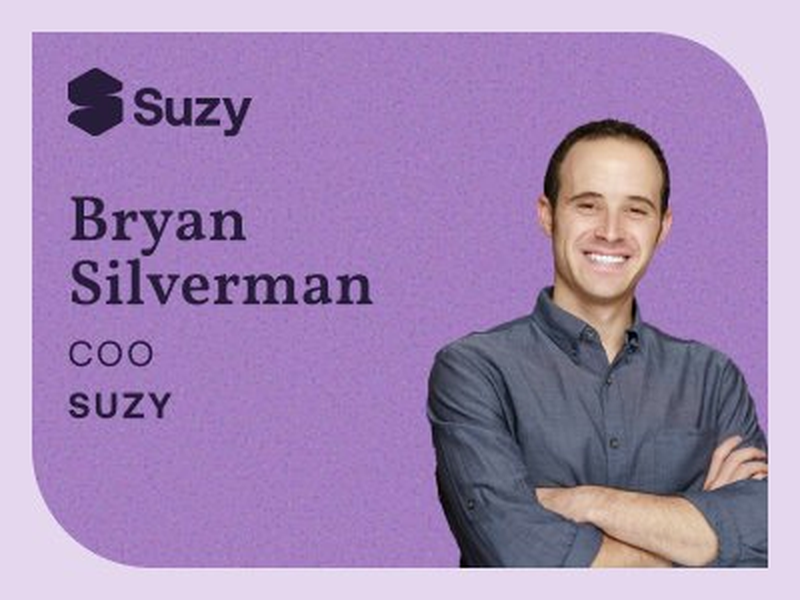

By Bryan Silverman, COO at Suzy
Yes, that is a classic hook to take advantage of what's happening in the world. What can I say -- I'm not above it!
I am a lifelong New Yorker. My team is actually the Nets -- yes, I know. But something has been happening in this city that has nothing to do with allegiance. The New York Knicks just won the NBA Championship for the first time since 1973. Fifty-three years. And New York feels electric in a way that is genuinely hard to put into words and impossible to manufacture.
The basketball is big - but that energy and the brand is what this story is about. And as someone who works every day with marketing leaders thinking about how to build something that lasts, I keep coming back to one thought: the Knicks did not get here by chasing what everyone else was doing. They got here by knowing who they were, building toward it with patience and conviction, and trusting that the people who cared would still be there when the moment arrived. And doing so in the hardest market in the world, with the most pressure. That is brand authenticity in its purest form. And it has lessons for every VP and Director of Marketing trying to build something durable without a Fortune 500 budget.
New York Fans Don't Just Support. They Expect.
To understand why this moment hits so hard, you have to understand New York sports fandom. This is not passive loyalty. New York fans expect -- it is the deal you make when you root for a franchise here. The ceiling is a parade down the Canyon of Heroes. The floor is years of frustration loud enough to rattle the Garden rafters.
Between 1999 and now, the Knicks delivered a lot of floor. The Isiah Thomas era. The Phil Jackson experiment. A revolving door of coaches, wasted cap space, and first-round exits. And through all of it, MSG kept selling out. The arguments never stopped. The "take the team away from Dolan" energy never faded.
That is the thing people miss when they write off a brand going through a rough stretch: the volume of frustration is proof that people still care. Indifference is what kills a brand. The Knicks never got indifference from New York. Ask any Yankees fan who lived through the post-dynasty years -- the expectation never left. Neither did the people.
That stored energy is brand equity. It does not show up on a balance sheet during the hard years. But it is there, accumulating, waiting for a product worthy of it.
They Zigged When Everyone Else Zagged
While other franchises were chasing marquee free agents and blockbuster trades -- the Brooklyn Nets famously assembled Kevin Durant, Kyrie Irving, and James Harden in the same locker room -- Leon Rose was doing something different recently in the Knicks front office. He hoarded assets. He made patient, identity-driven moves. And most importantly, he signed Jalen Brunson.
The Dallas Mavericks let Brunson walk for less than market value because they did not believe he could carry a franchise. Rose did. As Sportscasting detailed, the Brunson signing anchored a roster built not around star power but around shared identity -- the so-called "Nova Knicks," a Villanova-forged core of Brunson, Josh Hart, and Mikal Bridges built on toughness, unselfishness, and offensive connectivity. No single move generated a headline. Collectively, they built something with a clear identity: gritty, us-against-the-world, New York.
CBS Sports noted the Knicks may be just the third team since the NBA-ABA merger to reach the Finals without a player who was a high lottery pick by another franchise. They did not recruit the room. They built their own.
The result is a team that does not just execute -- it thrives under pressure. In these playoffs, the Knicks went 6-2 in games where they trailed by double digits, the best such record in 30 years of play-by-play data. In Game 4 of the Finals, they erased a 29-point halftime deficit -- the greatest comeback in NBA playoff history. That does not happen by accident. It happens when the identity is so clear that every person on the roster knows exactly who they are and what they are there to do.
Three Brands That Built the Same Way
The Knicks are a sports story. But the brand dynamic at play is not unique to sports. The most durable consumer brands in recent memory got where they are by making the same call: know what you are, build toward it with conviction, and do not abandon it when the category starts pulling in a different direction.
Patagonia
In November 2011, on Black Friday -- the single highest-volume retail day of the year -- Patagonia ran a full-page ad in The New York Times with the headline "Don't Buy This Jacket." The copy explained in detail the environmental cost of producing one of their bestselling fleeces and asked consumers to think before they bought. Every other retailer was running door-buster deals. Patagonia doubled down on the thing that made them Patagonia.
Revenue grew from approximately $400 million to $543 million in the year that followed. The campaign did not cost them their audience. It deepened the relationship with the people who already believed in what the brand stood for and attracted new ones who respected the conviction.
Dove
In 2004, the beauty category had a clear playbook: aspirational imagery, unattainable standards, the implicit promise that the product would close the gap between who you are and who you could be. Every major brand was running the same game.
Dove launched Real Beauty, a campaign built around real women and the idea that beauty does not require transformation. It was a direct zig against the category consensus. Dove grew from roughly $2.5 billion to $4 billion in sales over the decade that followed. The campaign became one of the most studied brand repositionings in marketing history -- not because it was clever, but because it was true to something the brand actually believed.
Liquid Death
Water. In a tallboy can. Marketed like a heavy metal band.
When the wellness category was going serene, clean, and aspirational -- pastel labels, mountain spring imagery, hushed voiceovers -- Liquid Death launched with the tagline "Murder Your Thirst" and built a brand around irreverence and edge. There was no rational reason it should work. Water is water. But the identity was so specific and so clearly not trying to be anyone else that it cut through a crowded market and grew to a $1.4 billion valuation by staying exactly who they said they were from day one.
None of these brands won by studying what the competition was doing and finding a slightly better version of it. They won by knowing what made them different and refusing to let go of it.
When the Build Meets the Moment
Here is what happens when years of identity-driven building finally meets its moment: the response is not proportional. It is disproportionate.
Madison Square Garden Sports is up nearly 50% year-to-date, tracking the Knicks' climb almost point for point through the season. Courtside seats at Finals home games resold for close to $280,000. The Finals averaged 19.6 million viewers on ABC and ESPN. And in the clinching Game 5, Jalen Brunson -- the guard nobody else believed in -- scored 45 points and was named Finals MVP, capping the most improbable run in recent Finals memory. Brunson, Hart, and Bridges became the first trio of teammates to win both an NCAA title and an NBA championship.
This is not a spike. It is a conversion. Fifty-three years of stored energy -- the arguments, the frustration, the sold-out crowds even through the bad years -- finally met a product worthy of it. The explosion looks sudden from the outside. From the inside, it was always there.
That is the thing about brand equity built on authenticity: it does not evaporate during the hard years. It waits. And when the product catches up to the loyalty, the return is outsized.
What This Means for You
If you are a VP or Director of Marketing, especially at a mid-market company, you probably cannot outspend your largest competitor. You cannot build a superteam. You cannot buy your way to the top of the category.
The Knicks could not either (or when they tried in the past, it did not work). Neither could Patagonia on Black Friday. Neither could Dove in a beauty market dominated by billion-dollar brands. Neither could Liquid Death with a strange can of water.
What they had was clarity. They knew who they were, who they were building for, and what they refused to become in pursuit of short-term gains. That clarity is a competitive advantage -- and it is available to any brand willing to commit to it.
Brand authenticity is not a campaign. It is a series of decisions made over time, most of them unglamorous, that compound into something the competition cannot easily replicate because it is not a strategy they can copy. It is an identity. And identities take years to build.
The Knicks spent five of those years quietly, patiently, doing the work. This weekend, it paid off. A city that never really stopped believing finally got what it had been storing up for 53 years. That is what the build looks like when it arrives.
Understanding where your brand stands with the people who matter most -- and building the kind of consumer loyalty that converts when your moment comes -- starts with the right intelligence. Explore how Suzy helps marketing leaders do exactly that.