



“Business is about trust, and trust can’t be built on a Zoom call. Humans must double down on communication, empathy, and care.” — Dr. Eliza Filby
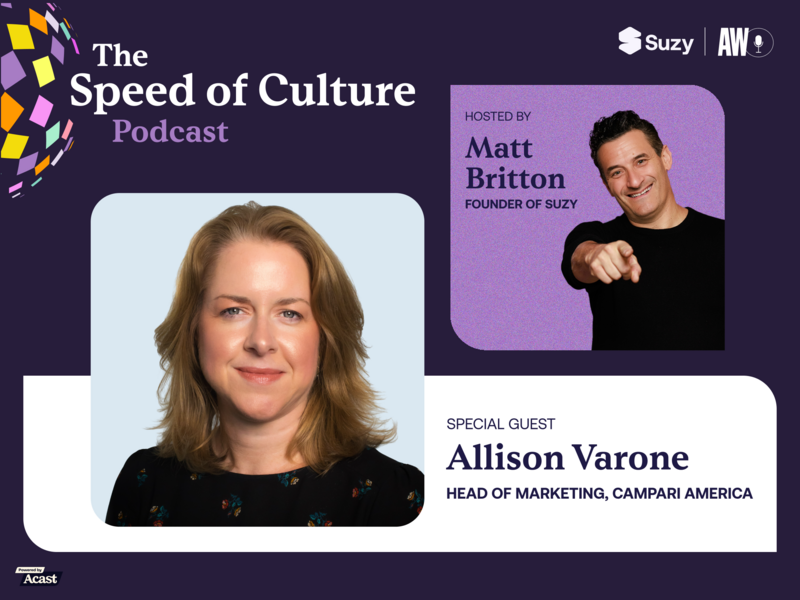
As AI accelerates and workplaces become increasingly multi-generational, organizations are facing a new cultural reality: five generations working together, each shaped by different technologies, different norms, and different expectations. Dr. Eliza Filby—a historian of generational change and bestselling author of Inheritocracy—helps companies understand these shifts and build environments where every generation can thrive.
In this episode of The Speed of Culture, she breaks down what’s driving generational differences, why AI amplifies the need for humanity, and the skills young people—and leaders—must cultivate to stay relevant in a world defined by constant change.
Tune into the latest episode or read the transcript below to learn more. Here are some top takeaways:
Generations Have Never Been Closer
Despite stereotypes, Eliza argues that today’s generations are more aligned than ever. Why?
- Economic interdependence: Parents now support kids well into their twenties.
- Shared living structures: Multi-generational households are rising.
- Values convergence: Boomers, Gen X, Millennials, and Gen Z are increasingly united by shared pressures around work, money, and social change.
For marketers, this means rethinking segmentation: today’s families spend and make decisions as multi-generational units, not siloed age groups.
Technology Is the Real Divider
Each generation grew up with a different “baseline technology,” shaping how they learn, work, and communicate:
- Gen X: The first true tech generation (Walkman, BlackBerry).
- Millennials: Lived the analog-to-digital shift.
- Gen Z: Smartphone + social media natives, deeply entrepreneurial.
- Gen Alpha: The first AI-native generation, raised on hyper-personalized algorithms.
These differences create tension—but also opportunity. In the age of AI, companies need both the disruptive instincts of younger workers and the wisdom and judgment of older ones.
Humanity Is the New Workplace Differentiator
As AI reshapes every knowledge-based task, Eliza says three deeply human skills will define future success:
- Communication — not presentation skills, but listening, empathy, and nuance.
- Teaching & learning — the ability to explain, self-teach, and transfer knowledge.
- Care — emotional intelligence, trust-building, and genuine interpersonal connection.
These skills are slow to build but irreplaceable—and leaders must carve out time for mentorship, observation, and shared learning, especially in hybrid environments where osmosis often disappears.
The Reality of Age Bias—and Why Mid-Career Talent Matters
Although headlines often focus on older workers feeling displaced, Eliza notes that young people are the most impacted by AI-driven job disruption, especially in entry-level roles.
But ageism does exist, especially for women over 40. Her advice for mid-career professionals:
- Stay agile and keep learning.
- Lean into the human skills AI cannot replicate.
- Build strong networks and advocate for your expertise.
- Sell your value with confidence—don’t assume tenure speaks for itself.
Millennials, she says, will not be able to “cruise to retirement.” Adaptability is now a life skill.
The Skills Every Young Person Needs to Future-Proof Their Career
Eliza outlines four practical focus areas for Gen Z and Gen Alpha:
- Build a personal brand — not necessarily on social media, but through expertise.
- Become a solopreneur — cultivate multiple income streams beyond a single employer.
- Develop human skills — listening, learning, eye contact, trust-building.
- Become a specialist — AI is the generalist; humans win on niche mastery.
Her biggest guidance: Bring together worlds that don’t naturally fit. Unexpected combinations—history + business, gaming + nature, creativity + tech—create originality AI can’t mimic.